Registration is open for the 2026 ISP Master Class, November 26-29: Learn more and register
Integral Somatic Psychology
ISP Professional Training, Chicago, IL, 2027
From: $295.00 / month for 12 months
 Dr. Raja Selvam
 Full Tuition $3,300 or $295/month for 12 months
 12 Days of Somatic Training
 In-Person Demonstration Sessions
 Daily Supervised Practice Sessions
 Certification Program
ISP Professional Training, Chicago, IL
Make Even Your Trauma Work Deeper, Faster, and Safer
Dr. Raja Selvam
TRAINING DATES
M1 March 12-15, 2027
M2 September 17-20, 2027
M3 March 31 – April 3, 2028
Make Even Your Trauma Work Deeper, Faster, and Safer
Adding Integral Somatic Psychology™ (ISP™) to your toolkit can help make your trauma work more effective in all therapy modalities you use in your practice.
And improve treatment times and outcomes in all therapy modalities you use, whether you are working with trauma or other experiences in your clients.
Imagine taking your clients confidently deeper and quicker into their emotional and somatic processes to resolve their symptoms faster, at higher levels of safety and stability for both clients and therapists. How is that possible?
There are two ways in which ISP accomplishes that.
1. By using the latest research in neuroscience on the physiology of cognition, emotion, and behavior.
ISP has more of a scientific basis than other somatic modalities.
2. By working with defenses and resources in all of our bodies, not just in the physical body.
ISP offers the most complete model of the body among somatic modalities.
During the ISP Professional Training, you’ll learn to implement the six unique features of ISP, which will help you become an even more effective and transformative therapist in general and trauma therapist in particular:
- Work with emotion in the body at the level of emotions, not sensations
- Expand emotional experiences throughout the body
- Use a broad definition of emotions to access them quickly
- Rapidly build emotional capacity through the body
- Work with emotion and physiological dysregulation in the body at the same time.
- Work with all our bodies, not just the physical body.
ISP is a New State-of-the-Art Approach
ntegral Somatic Psychology™ (ISP™) is based on the latest neuroscientific understanding of embodied cognition, emotion, and behavior from the West, and the most comprehensive understanding of the multiple bodies that contribute to our experiences from the East.
Dr. Raja Selvam, PhD, a licensed clinical psychologist from the United States, is the developer of Integral Somatic Psychology (ISP) and the author of the bestselling book The practice of embodying emotions: A method for improving cognitive, emotional, and behavioral outcomes in 13 languages. Dr. Selvam teaches his approach in the ISP Professional Training.
ISP is an easy-to-learn approach. The ISP Professional Training is offered in three 4-day modules. Each day you’ll learn new somatic techniques, watch a clinical demonstration with a student, and practice the techniques during practice sessions. The practice sessions are supervised by experienced assistants. After each training module you’ll get access to the video recordings for review and practice at home.
Who Can Benefit from the ISP Professional Training?
ISP is an ideal complementary somatic training for therapists in any modality looking for an easy-to-learn somatic approach to harness the power of the body to improve outcomes and treatment times in their work, whether you are working with trauma or other experiences in your clients
ISP is also an ideal complementary post-graduate training for practitioners of all body psychotherapy modalities, including Somatic Experiencing® (SE™), Sensorimotor Psychotherapy, etc.
Watch a Demonstration
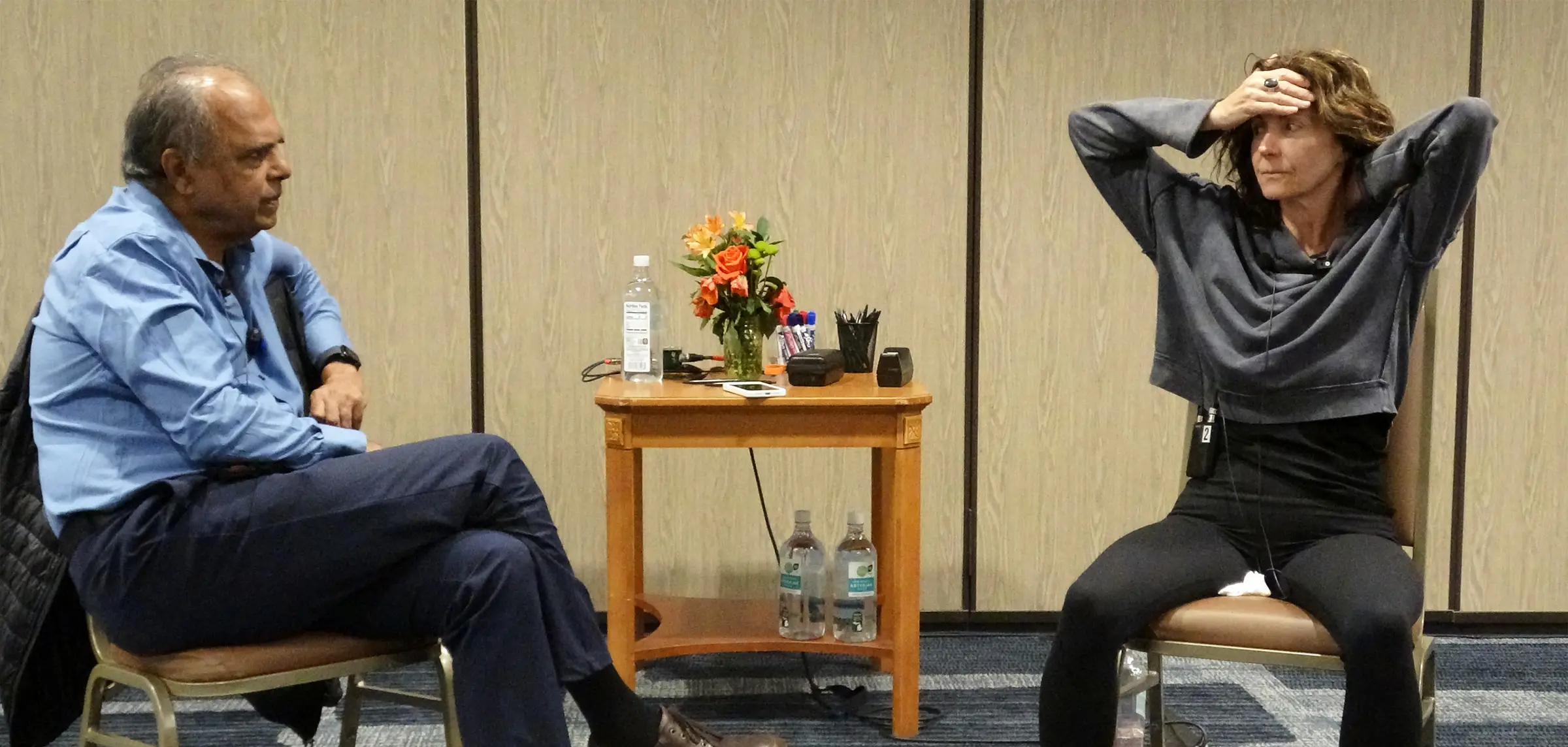
You can see for yourself how simple, effective, and quick ISP’s muti-body techniques can be in resolving symptoms from complex traumas through embodying emotions in the clinical demonstration.
Here is How the 6 Unique Features of ISP Will Make You an Even More Effective Therapist in General and Trauma Therapist in Particular
1. Work with emotion in the body at the level of emotions, not sensations
Why?
Focusing on body sensations when emotions occur is a widely used suboptimal strategy born of a common misconception that the experience of emotion in the body is nothing more than physical body sensations.
Working with the body at the level of emotion has three advantages:
You will help your clients get in touch with their bodies faster.
You will be able to distinguish between sensations and emotions in body experience, and therefore be able to focus on emotions
You will avoid the risk of neutralizing or eliminating important emotional experiences by tracking body sensations
2. Expand emotional experiences throughout the body
With the efficient techniques of ISP, you will be able to help your clients quickly access and expand the experience of their emotions throughout their brain and body so that they can tolerate them better.
Wait! Wouldn’t painful emotions become more intolerable when they are spread to more of the brain and the body?
Quite the opposite!
Emotions become more bearable when they are spread out in the body. You will quickly find that your clients will be able to stay with emotions longer, giving the brain more time to process them optimally.
Research shows that emotion determines cognition and behavior in every moment and in every experience, and that the presence of emotion in as much of the body is essential for the brain to effectively process all aspects of the situation—cognitively, emotionally, and behaviorally.
This is how ISP can help you improve cognitive, emotional, and behavioral outcomes in all therapy modalities and in all clinical circumstances, whether you are working with trauma or other experiences in your clients.
3. Use a broad definition of emotions to access them quickly
Isn’t it conventional wisdom that it takes a long time to build a relationship with clients to get to their emotions?
It is a limiting belief based on a narrow definition of emotions and the common lack of attention to the body in therapy in most therapy modalities.
Think about this: Your clients primarily seek help when they cannot tolerate one emotional experience or another. Your client feels bad and therefore seeks your help. Feeling bad is an emotion. We call it a sensorimotor emotion.
ISP works with not only primary and secondary emotions but also with the always-present and often-overlooked sensorimotor emotions, such as simply feeling bad or good. This, in combination with ISP’s multi-body somatic techniques, will make it possible for you as a therapist to access and work with emotions in most of your clients from the very first session.
4. Rapidly build emotional capacity through the body
ISP focuses on building a greater capacity for emotions in your clients—especially difficult ones—as quickly as possible through the body.
Why is that important?
When you learn how to quickly build capacity for emotions in clients, especially for difficult experiences, and teach them simple self-help self-touch somatic tools, you can rapidly help your clients to:
- resolve their psychological and psychophysiological (psychosomatic) symptoms that often have unbearable emotional stress as their cause,
- self-soothe, self-regulate, and even do further work on their own between sessions, reducing their dependency on you,
- have more resilience from forming symptoms when they face similar situations or emotions again, and
- maintain greater physical, energetic, psychological, relational, and even spiritual well-being, each of which is known to depend on a person’s capacity to tolerate opposites in emotional experiences.
5. Work with emotion and physiological dysregulation in the body at the same time
How is that possible?
In traumatic experiences, more often than not, there is a coupling of high levels of physiological dysregulation and high levels of emotional stress in the brain and in the body.
When we focus more on downregulating physiological dysregulation, emotional experiences can be compromised because difficult emotions in the body are, by definition, generated from dysregulating the body physiology, giving the false impression that the emotions have been processed.
On the other hand, when we focus more on processing difficult emotions, the level of dysregulation in the body can increase because that is how difficult emotions are generated in the body.
Is there a way around this dilemma?
Yes, using ISP, you will be able to work more effectively with both physiological dysregulation and emotional experience simultaneously through its integrative body techniques.
Therefore, you will have more success working with emotions in traumatic experiences in general.
In particular, you will improve your outcomes in working with developmental traumas, complex traumas, psychophysiological (psychosomatic) symptoms, and syndromes, instances where high levels of physiological dysregulation and emotional stress typically occur together.
6. Work with all our bodies, not just the physical body
Using the ISP approach, you will learn to use a wide range of somatic self-touch techniques for working with not just our physical body, but also our subtle and collective bodies. With these highly effective somatic techniques, you can, on all levels of the body, quickly:
- undo body defenses to access trauma and other experiences,
- release inherent body resources,
- contain, regulate, and transform trauma and other experiences,
- and make the process safer and more stable for yourself and your clients.
Techniques from Western Osteopathy will help you to work with the physical body and techniques from Eastern Psychology will assist you in working with the subtle and the two collective bodies.
Even if you have no prior background in body psychotherapy, you can quickly learn these simple self-touch techniques and teach them to your clients for use during sessions and for self-help when they are on their own.
This is one of the reasons the complete ISP professional training is offered in just three 4-day modules: ISP is an easy-to-learn approach.
ISP offers the most complete model of the body among somatic modalities
Some might react reflexively to the statement that we have more than one body, that it is unscientific or woo-woo.
If you share such unfortunate popular conditioning, you can read my article The One-Body Error in Psychology and Somatics: How to Overcome It? for the evidence for our other bodies and the reasons for the one-body error in psychology and somatics in the West.
Or, you can see for yourself how simple, effective, and quick ISP’s muti-body techniques can be in resolving symptoms from complex traumas through embodying emotions in the clinical demonstration below.
Visit the training schedule to find a training nearby or online.
Therapists who have taken this capstone training say it is the crown jewel of all somatic psychology approaches.
About Faculty
Raja Selvam, PhD
Dr. Raja Selvam, a licensed clinical psychologist from the United States, is the developer of Integral Somatic Psychology™ (ISP™) and the author of the bestselling book The practice of embodying emotions: A method for improving cognitive, emotional, and behavioral outcomes in 13 languages. Dr. Selvam teaches his approach in the ISP Professional Training.
Read more
Dr. Selvam is also a senior trainer in Peter Levine’s Somatic Experiencing® (SE™) professional trauma training program. He has taught in over two dozen countries on six continents for nearly thirty years. His work is inspired by Jungian and archetypal psychologies, Kleinian and intersubjective schools of psychoanalysis, Reichan and Neo-Reichian body psychotherapy approaches such as Bioenergetics, Bodynamic Somatic Developmental Psychology from Denmark, and Somatic Experiencing® (SE™), affective neuroscience, quantum physics, yoga, Polarity Therapy, and Advaita Vedanta (a spiritual psychology from India).
Training Information
Integral Somatic Psychology™ is unique among existing somatic psychology or body psychotherapy approaches in two important ways.
One is that it offers a neuroscience-backed, body-based, and emotion-focused method for improving treatment times and diverse outcomes (somatic, energetic, cognitive, emotional, behavioral, relational, and spiritual outcomes) in all therapy modalities, including all body psychotherapy and somatic psychology approaches.
ISP accomplishes this through the practice of embodying emotions.
The practice of embodying emotions is the conscious expansion of emotional experience to as much of the brain and physical body as possible, giving the brain the time required to process the situation cognitively, emotionally, and behaviorally.
This is predicted by the research paradigm of embodied emotions in cognitive and affective neurosciences, and by a number of other recent scientific research findings in what can collectively be called the science of embodied cognition, emotion, and behavior.
Two, ISP has a unique advantage over most if not all, somatic psychology and body psychotherapy approaches that suffer from what can be termed as the one-body error and problem that limits their effectiveness.
Psychotherapy approaches that do not work with the body suffer from the no-body problem because they overlook the overwhelming modern evidence that cognition, emotion, and behavior depend not only on the brain but also on the body and the environment.
On the other hand, Somatic psychology approaches err in assuming that we have only one body: The one that gets conceived in a womb and is laid to rest in a tomb. This follows from science limiting reality only to things that can be perceived or measured despite the obvious fact that our ability to measure reality is quite limited.
Eastern Psychology, based on refined Eastern phenomenology, has long established that our body consists of four levels: Two at the individual level and two at the collective level. They are the individual gross body, the individual subtle body, the changing collective body of the universe, and its paradoxical basis of the unchanging collective body of pure awareness.
Each of these four levels contributes to all of our experiences and to their regulation. Each of these levels is, therefore, crucial for our clients’ profound transformation.
To access, expand and regulate emotion in the physical body, ISP uses Western Osteopathic techniques for working with the physical body as well as Eastern subtle body techniques for working with our multiple bodies, individual and collective.
Day 1-3: 10 am to 1 pm and 3 pm to 7 pm
Day 4: 10 am to 1:30 pm
Restaurants are in walking distance.
Holiday Inn Chicago O’Hare – Rosemont
6600 Mannheim Road, building 2
Rosemont, IL 60018
Use this link to the hotel website to book your room for Module 1 and get a discount.
Staybridge Suites Chicago O’Hare – Rosemont.
6600 Mannheim Rd
Rosemont, IL 60018
Use this link to the hotel website to book your room for Module 1 and get a discount.
The hotel charges a parking fee of $18/day. The fee may be subject to change.
The hotel is ADA-compliant.
A limited number of partial scholarships may be available for this ISP Professional Training location. Please contact your training coordinator if you’d like to apply for a scholarship.
All students will receive access to the recordings. Students who need to miss a module can catch up by video.
If you have questions about the training or the training location, please get in touch with Donna Amstutz by email.
1. If an applicant is denied access to the training for any reason, a full refund will be issued.
2. If the training is canceled by Integral Somatic Psychology, a full refund will be issued.
3. If a training module is rescheduled, tuition will be transferred to the rescheduled training
or another location. No refund will be issued.
4. If a student cancels a training at least 21 days prior to a training module, a full refund will be issued, less a $75 nonrefundable cancellation fee.
5. If a student cancels a training within 20 days of the start date of a training module, a 50% refund will be issued for the tuition for that module; if the student paid in advance tuition for additional future training modules, a full refund will be issued for tuition for those additional future training modules.
6. No refunds will be issued for no-shows.

Invaluable
“The emphasis on the bodily experience of emotions and how to work with them—recognize, experience deeply, and manage/regulate—was invaluable for my professional and personal growth.”
— Kenneth Talan, MD, SEP, Child and Adult Psychiatrist

Dr. Selvam is a licensed clinical psychologist, the author of The Practice of Embodying Emotions: A Guide for Improving Cognitive, Emotional, and Behavioral Outcomes, and the developer of Integral Somatic Psychology (ISP), an effective somatic therapy that helps clients achieve optimal mental health by fully embodying their emotions. He has taught for twenty-five years in over twenty countries.
Your privacy is important to us. We do not share, sell, trade or rent your personal information to unaffiliated third parties. Read our Privacy Policy.
